czego szukasz?
Układy wydechowe stanowią jedno z najbardziej skoncentrowanych źródeł ciepła w pojeździe lub instalacji silnika. Kolektory, kolektory wydechowe i rury spustowe mogą być zamontowane w niewielkiej odległości od przewodów elektrycznych, przewodów, czujników, paneli nadwozia i elementów dolotowych. W przypadku ograniczonej przestrzeni, kontrola tego ciepła staje się elementem konstrukcji układu, a nie opcjonalnym dodatkiem.
Owijka wydechujest jedną z najprostszych metod umieszczania izolacji termicznej bezpośrednio na gorącej rurze.
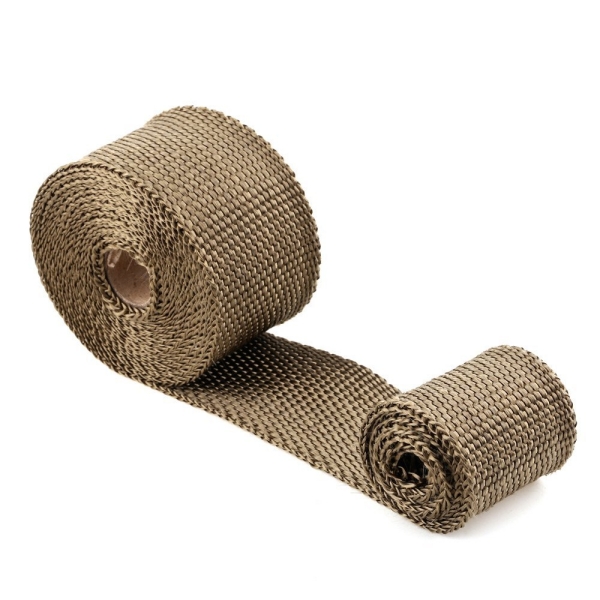
Opisywany również jakoowijka termiczna układu wydechowego, owijka rury wydechowej, owijka kolektora wydechowegolub izolacyjna osłona wydechu, to tkana tkanina odporna na wysokie temperatury, montowana wokół rury wydechowej w nakładających się warstwach. Dostępne są różne systemy włókien dla różnych zakresów temperatur i środowisk pracy.
Firma BSTFLEX produkuje szeroką gamęowijka termiczna układu wydechowego i kolektorado zarządzania temperaturą spalin w motoryzacji, motocyklach, motorsporcie, silnikach Diesla, jednostkach pływających i przemyśle.
Główną funkcją osłony układu wydechowego jest izolacja termiczna.
Goła rura wydechowa przekazuje ciepło do otoczenia poprzez promieniowanie i konwekcję. Owinięcie rury tworzy warstwę izolacyjną z materiału tekstylnego pomiędzy gorącym metalem a pobliskimi elementami.
Dobrze dobrany wrap może pomóc:
zmniejszyć promieniowanie cieplne wokół rury wydechowej;
ograniczyć narażenie węży, przewodów i czujników na działanie ciepła;
zmniejszenie przenikania ciepła w kierunku podłóg i grodzi;
poprawić kontrolę termiczną w zatłoczonych komorach silnika;
chronić operatorów przed przypadkowym kontaktem z gorącymi powierzchniami;
zachowują więcej energii cieplnej w układzie wydechowym.
Ostatni punkt wyjaśnia, dlaczego osłony termiczne układu wydechowego są powszechnie stosowane wokół kolektorów i rur spustowych turbosprężarki.
Jednak owijki układu wydechowego nie należy traktować jako uniwersalnego materiału naprawczego. Standardowa owijka termiczna służy do odprowadzania ciepła, a nie do uszczelniania pękniętych rur czy naprawy nieszczelności układu wydechowego.
Wybórowijka rury wydechowejCzęstym błędem jest opieranie się tylko na kolorze lub szerokości.
Wydajność gotowej instalacji zależy od kilku czynników, na które należy zwrócić uwagę:
| Czynnik selekcji | Dlaczego to ma znaczenie |
|---|---|
| Temperatura spalin | Określa wymagany system włókien |
| Średnica rury | Wpływa na szerokość owijania i wymaganą długość rolki |
| Geometria układu wydechowego | Ostre zakręty i kolektory wymagają większej elastyczności |
| Zachodzić na siebie | Wpływa na grubość izolacji i zużycie materiału |
| Narażenie na wilgoć | Ważne w zastosowaniach drogowych, morskich i zewnętrznych |
| Zanieczyszczenie olejem i paliwem | Może mieć wpływ na długoterminową żywotność |
| Wibracja | Wpływa na trwałość i sposób mocowania |
| Częstotliwość konserwacji | Trwałe opakowanie może nie pasować do regularnie wyjmowanych elementów |
Z tego powodu najlepszy materiał na osłonę układu wydechowego motocykla może nie być odpowiedni do rury wydechowej turbosprężarki lub przemysłowej rury wydechowej silnika Diesla.
Włókno szklane pozostaje jednym z najczęściej stosowanych materiałów do izolacji spalin.
Jest elastyczny, ekonomiczny i można go splatać w wąskie taśmy, które dobrze dopasowują się do łuków i przejść rur. Owijka z włókna szklanego jest powszechnie stosowana w:
kolektory wydechowe samochodowe wolnossące;
rury wydechowe motocykli;
rury zbiorcze;
ogólne rury wydechowe;
rurociągi przemysłowe o umiarkowanej i wysokiej temperaturze.
Firma BSTFLEX oferuje szereg konstrukcji na bazie włókna szklanego, w tym:Pro Black Exhaust Heat Wrap, która łączy warstwę izolacyjną z włókna szklanego odporną na wysoką temperaturę z zewnętrzną strukturą ze stali nierdzewnej, zapewniając dodatkową ochronę przed ścieraniem i uderzeniami.
Włókno szklane jest często punktem wyjścia w zastosowaniach, w których koszt, elastyczność i praktyczna kontrola ciepła są ważniejsze niż maksymalna dopuszczalna temperatura.
Terminowijka wydechu tytanowajest powszechnie stosowany na rynku motoryzacyjnym, ale zwykle nie oznacza to, że okleina zawiera metaliczny tytan.
Tego typu produkty wytwarza się zazwyczaj z włókien bazaltu lub skał wulkanicznych.
Włókna bazaltowe charakteryzują się dobrą elastycznością, odpornością na ciepło i powtarzające się cykle termiczne. Są często wybierane do:
nagłówki wydajnościowe;
rury spustowe turbosprężarki;
układy wydechowe motocykli;
układy wydechowe do wyścigów;
instalacje narażone na wyższe temperatury niż w przypadku konwencjonalnych zastosowań włókna szklanego.
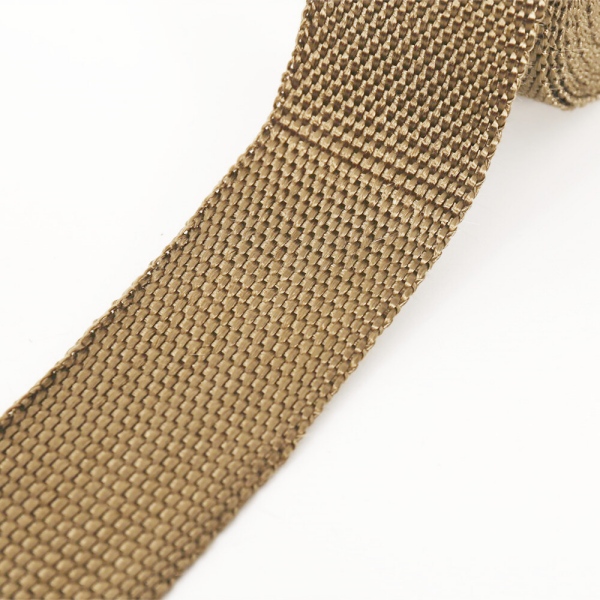
BSTFLEXCzarna tytanowa owijka rury wydechowejjest wytwarzany z włókien pozyskiwanych ze skał wulkanicznych i jest dostępny w różnych szerokościach i długościach rolek. BSTFLEX identyfikuje ten produkt do bezpośredniego narażenia na ciepło do 1800°F (964°C) z wyższą zdolnością do przerywania.
Praktyczną zaletą otuliny bazaltowej jest nie tylko odporność na wysokie temperatury. Jest ona również na tyle elastyczna, że dopasowuje się do kształtów kolektorów i rur wydechowych bez konieczności stosowania sztywnego systemu izolacji.
Gdy temperatura spalin wykracza poza praktyczny zakres stosowania standardowego włókna szklanego, bardziej odpowiednim wyborem stają się tkaniny o wysokiej zawartości krzemionki.
Włókna krzemionkowe charakteryzują się znacznie wyższą zawartością krzemionki niż konwencjonalne szkło typu E i są stosowane w przypadku, gdy ciągła ekspozycja na wysokie temperatury jest bardziej wymagająca.
BSTFLEX produkujeOsłona termiczna kolektora wydechowego Inferno High Temperaturez teksturowanej przędzy z amorficznej krzemionki. Produkt jest przeznaczony do pracy w temperaturach do 2000°F.
Typowe zastosowania obejmują:
układy wydechowe z turbodoładowaniem;
silniki wyścigowe o dużej mocy;
exhaust manifolds;
high-temperature headers;
industrial exhaust lines;
severe thermal zones where fiberglass may not provide enough temperature margin.
Silica wrap should therefore be considered when the design requirement is driven primarily by temperature rather than cost.
Some exhaust systems require more than simple woven fiber insulation.
Dust generation, surface abrasion, moisture exposure and installation cleanliness may also matter.
For these applications, composite constructions can provide additional properties.
The BSTFLEXSilicone Exhaust Wrap Composite Fiberglass & Silicone Laggingcombines a fiberglass insulation structure with a silicone outer treatment. The coating helps contain loose fibers and creates a more durable, cleaner external surface for applications where an exposed untreated textile is less desirable.
This type of construction can be useful on diesel engines, industrial pipework and equipment where durability and handling characteristics are important alongside thermal insulation.
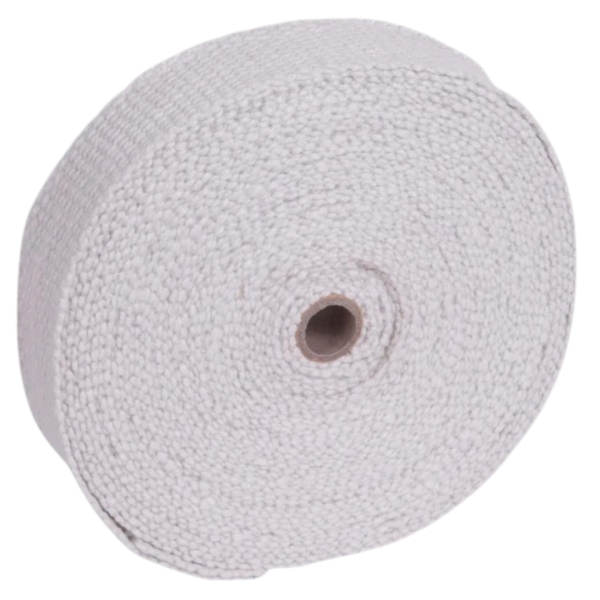
Headers are one of the most common locations forheader wrap.
Individual primary tubes create a large heated surface area, and they often pass close to ignition wiring, brake lines and other heat-sensitive components.
Flexible wrap can follow each primary tube much more easily than a rigid metal shield.
Cast or fabricated exhaust manifolds may also benefit from thermal containment, particularly in compact engine bays.
However, very irregular manifold shapes may be better suited to a removable insulation blanket rather than conventional spiral wrap.
A turbocharger downpipe can be one of the hottest exhaust components outside the turbine housing itself.
Using high-temperatureexhaust heat wraparound a downpipe can reduce radiant heat reaching:
intake piping;
wiring;
brake systems;
bulkheads;
transmission tunnels;
nearby body structures.
For severe turbo applications, basalt or silica materials are generally more relevant than entry-level fiberglass wrap.
Motorcycles expose exhaust headers close to the rider and surrounding bodywork.
For this reason,motorcycle exhaust wrapis used for both thermal management and surface-contact protection.
Fiberglass and basalt-based wraps are commonly selected depending on the temperature and desired appearance.
Diesel engines and generators often operate for long periods under sustained load.
In these systems, exhaust insulation is primarily about:
personnel protection;
nearby equipment protection;
compartment temperature control;
reduction of radiant heat.
Larger industrial systems may use wrap, lagging, removable blankets or combinations of these technologies.
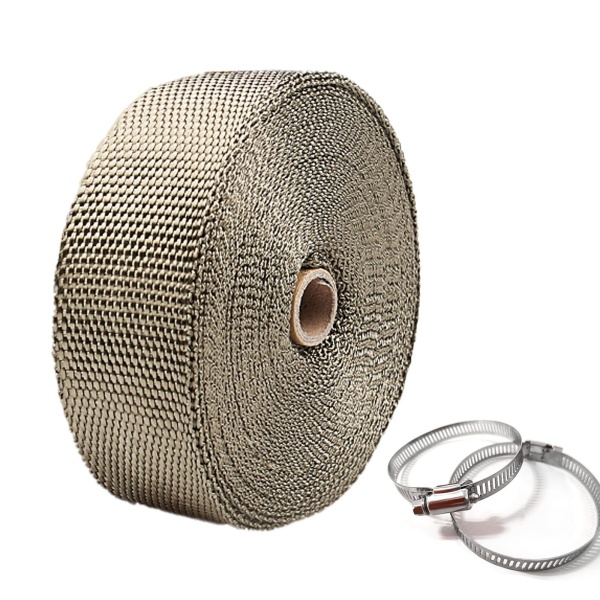
Both products insulate exhaust components, but their construction and installation are different.
Exhaust wrapis installed by winding narrow textile tape around the pipe.
It is best suited to:
headers;
long straight pipe sections;
small-diameter exhaust tubes;
collectors;
downpipes;
motorcycle exhaust systems.
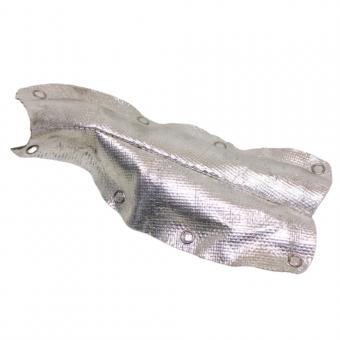
Anexhaust insulation blanketis a preformed textile assembly designed to fit a specific component.
Blankets are more appropriate for:
turbochargers;
large manifolds;
silencers;
large-diameter exhaust pipe;
components that require regular service access.
If the component must be removed frequently, a reusable blanket may be more practical than permanently wrapped tape.
A metal heat shield works differently.
Instead of placing insulation directly against the exhaust pipe, a metal shield normally reflects or blocks radiant heat with an air gap between the hot component and the shield.
This makes metal heat shields useful where:
airflow is available;
the hot component must remain exposed;
service access is important;
direct pipe insulation is not desirable.
Exhaust wrap is generally easier to install around complicated tubing geometry, while a rigid heat shield can be more appropriate when controlling directional radiant heat.
BSTFLEX supplies both textile wraps andexhaust heat shield insulation, allowing the thermal protection method to be matched to the actual installation rather than forcing every system into the same solution.
A useful selection process starts with five questions.
Do not select material only from engine horsepower or vehicle type.
Consider both:
continuous operating temperature;
short-duration peak temperature.
A naturally aspirated street engine, turbocharged racing vehicle and industrial diesel generator can have very different thermal requirements.
Stainless steel, mild steel and other exhaust alloys respond differently to repeated heat cycles and moisture exposure.
The pipe condition should also be inspected before wrapping.
Do not cover corrosion, cracks or damaged welds simply to hide them.
A narrow, flexible wrap is useful around:
tight-radius bends;
small motorcycle headers;
complex collectors.
Wider wrap covers straight pipe more quickly but can be harder to position around complicated geometry.
Road vehicles, marine equipment and industrial engines may encounter:
water;
mud;
salt;
oil;
fuel;
dust.
These factors should be considered when choosing both the wrap and any surface treatment.
If the pipe or component needs frequent inspection, a removable jacket or blanket may reduce maintenance time.
BSTFLEX also manufacturesHigh Velocity Jacket Exhaust System Wrap, a jacket-style approach for applications where conventional spiral wrapping is not the preferred installation method.
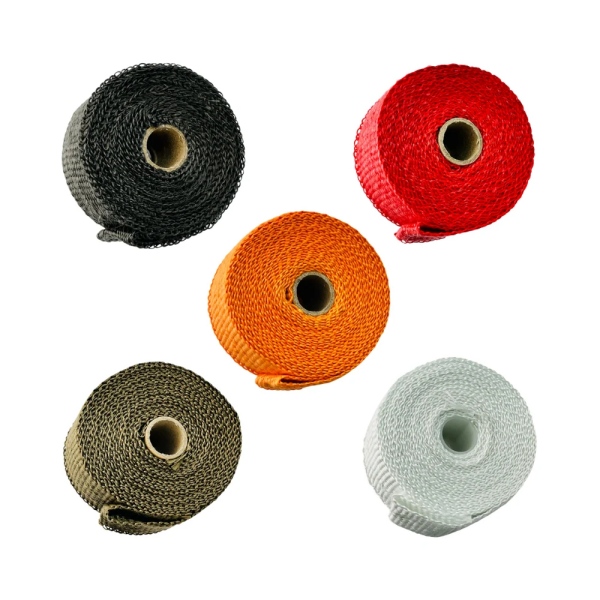
Two widths dominate many automotive installations:
1 inch wrap
Better suited to:
small-diameter tubing;
tight bends;
compact motorcycle headers;
complex collectors.
2 inch wrap
Better suited to:
longer straight exhaust pipes;
larger headers;
downpipes;
applications where faster installation is important.
BSTFLEX also manufactures wider exhaust wrap formats for large-diameter pipes and industrial installations.
The correct width should therefore be selected according to pipe diameter and geometry rather than assuming wider wrap is always better.
Even the correct exhaust wrap can perform poorly if installed incorrectly.
A typical installation involves:
Inspecting and cleaning the exhaust pipe.
Determining the starting point and wrap direction.
Maintaining a consistent overlap.
Working progressively around bends without creating large gaps.
Securing the beginning and end using stainless-steel ties or clamps.
Checking nearby brackets, sensors and moving components.
Re-inspecting the installation after the first thermal cycles.
The exact overlap should follow the product specification and application requirement.
Too little overlap may leave uneven thermal coverage.
Excessive overlap consumes more material and creates unnecessary thickness.
There is no single roll length that fits every exhaust system.
Material consumption depends on:
pipe outside diameter;
total pipe length;
wrap width;
overlap percentage;
number of bends;
collector geometry;
whether multiple layers are required.
For an OEM or production project, the better approach is to calculate material use from an actual drawing, pipe sample or installation specification rather than estimating from vehicle type alone.
BSTFLEX supports custom roll widths and lengths for volume projects where standard retail-sized rolls are inefficient.
Exhaust wrap is effective thermal insulation, but it has limits.
It does not replace:
repair welding;
exhaust leak repair;
damaged flange replacement;
structural pipe repair;
proper heat shielding around extremely sensitive components;
routine inspection of the exhaust system.
It should be treated as part of an engineered thermal management system.
For some installations, the best solution may combine:
exhaust wrap;
removable insulation blankets;
reflective barriers;
metal heat shields;
protective sleeves for nearby wiring and hoses.
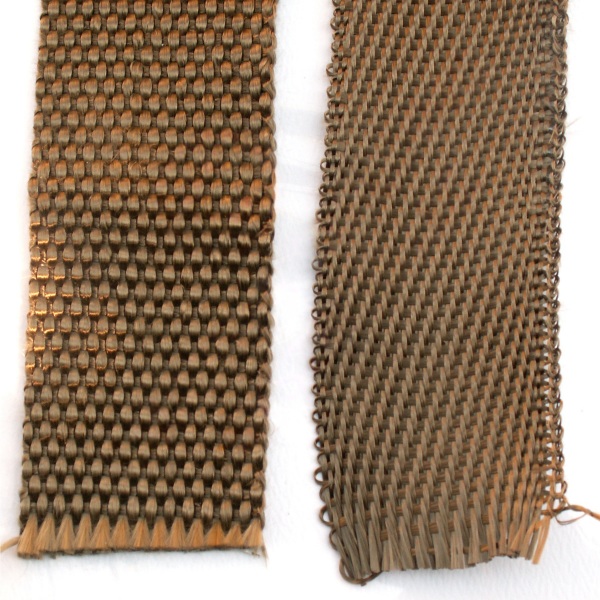
| Exhaust Application | Common Material Direction |
|---|---|
| General automotive header | Fiberglass |
| Motorcycle exhaust | Fiberglass or basalt |
| Performance header | Basalt / titanium-style |
| Turbo downpipe | Basalt or silica |
| Extreme-temperature header | Silica |
| Industrial exhaust pipe | Fiberglass, silica or composite |
| Diesel engine exhaust | Fiberglass, silica or silicone composite |
| High-abrasion area | Reinforced or composite construction |
The final choice should always be based on actual temperature, environment and installation design.
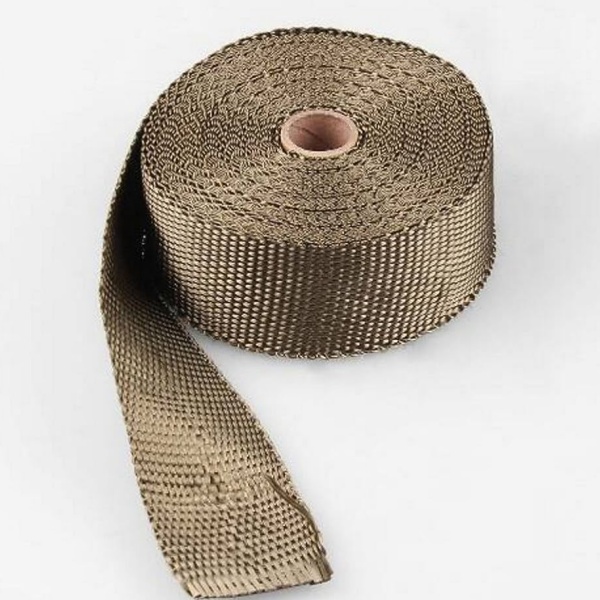
For manufacturers and distributors, exhaust wrap specification goes beyond choosing a fiber type.
Production requirements may include:
non-standard widths;
specific roll lengths;
private-label packaging;
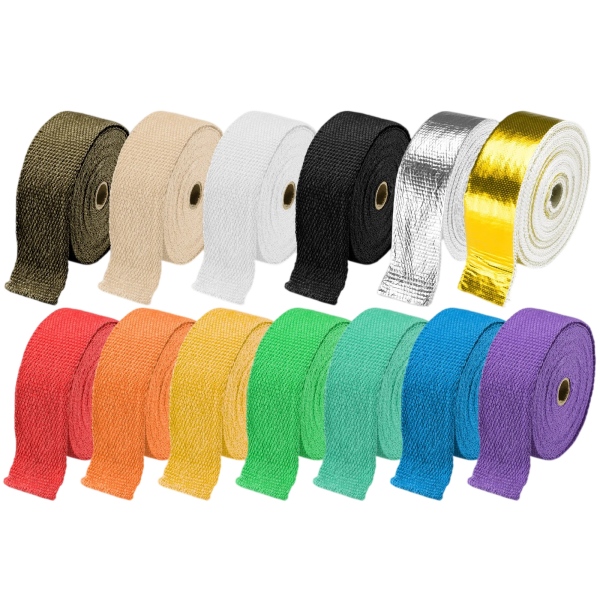
custom colors;
material identification;
stainless-steel fixing ties;
application-specific constructions;
sample-based development.
BSTFLEX manufactures exhaust thermal protection products for OEM, distributor and industrial applications and can develop specifications around the exhaust system rather than supplying only fixed retail configurations.
Explore the completeBSTFLEX Exhaust and Header Heat Wrap rangefor fiberglass, basalt, silica, composite and specialty exhaust insulation products.
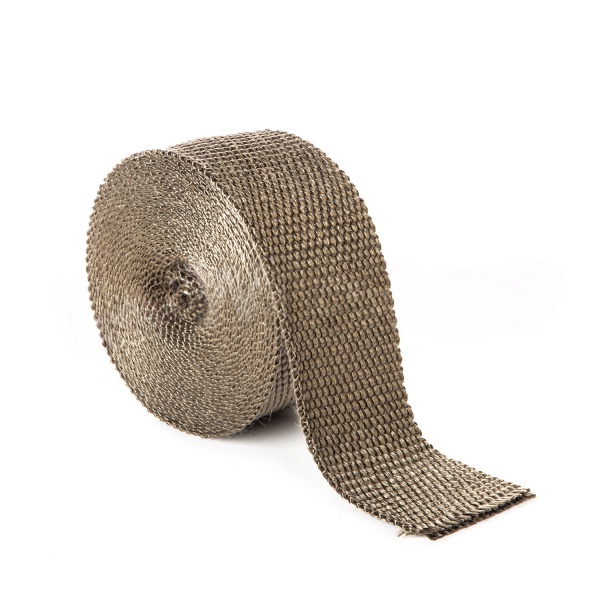
Exhaust wrap is a woven high-temperature insulation tape installed directly around exhaust pipes, headers, manifolds or downpipes to reduce radiant heat and improve thermal containment.
In most automotive and industrial applications, the terms refer to the same general product family. “Exhaust heat wrap” emphasizes its thermal insulation function, while “exhaust wrap” is the broader commercial term.
Nie ma jednego najlepszego materiału. Włókno szklane nadaje się do wielu ogólnych zastosowań, bazalt jest powszechnie wybierany do systemów o wyższej wydajności, a otulina o wysokiej zawartości krzemionki jest odpowiednia do zastosowań w ekstremalnych temperaturach.
Tak. Rury spustowe są powszechnym zastosowaniem osłony układu wydechowego odpornej na wysokie temperatury. Materiał należy dobrać w zależności od rzeczywistej ciągłej i szczytowej temperatury spalin.
Zazwyczaj nie. Produkty sprzedawane jako tytanowe osłony wydechu są zazwyczaj wykonane z włókien bazaltowych lub pochodzących ze skał wulkanicznych, a nie z metalicznego tytanu.
Nie. Standardowa osłona termiczna układu wydechowego służy do zarządzania ciepłem, a nie do naprawy rur konstrukcyjnych lub nieszczelności.
Węższą owijkę łatwiej zamontować wokół rur o małej średnicy i ciasnych zakrętów, natomiast szerszą owijkę szybciej się zakłada w przypadku większych lub prostszych rur wydechowych.

No.10, Chuangxin North Road, Nanshan Park, Ningguo Economic and Technological Development Zone, Ningguo City, Anhui Province, China
tel/Whatsapp : 0086-15856303740
e-mail : sales@bstbraidedsleeve.com
Skype : vanesa-cheng