czego szukasz?

Generator exhaust silencer packing is the fibrous acoustic material installed inside the absorptive section of a suitable engine exhaust silencer. It should not be confused with insulation wrapped around the outside of the silencer, exhaust pipe or stack. The internal packing is selected around gas temperature, silencer geometry, fiber retention, filling weight and operating duty.
For industrial and diesel generator projects, the purchase specification should identify exactly where the packing is used and whether the silencer is absorptive, reactive, or a combined design. Not every chamber in an industrial exhaust silencer contains fiber, and packing should never be added to an internal passage simply because empty space is visible.
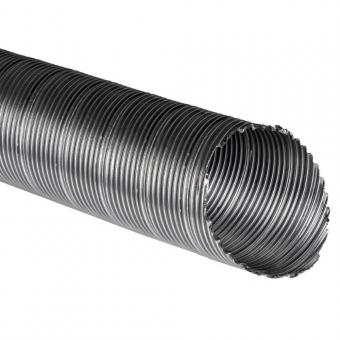
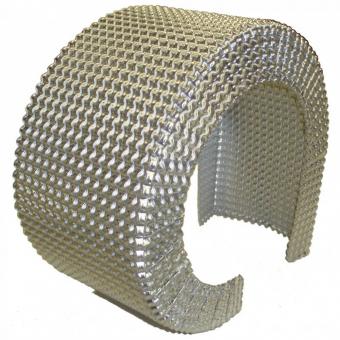
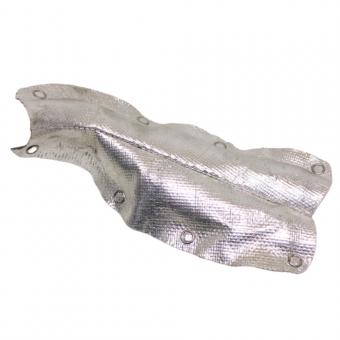
BSTFLEX supplies exhaust silencer packing materials including fiberglass, stainless steel wool, ceramic fiber, basalt fiber and fabricated packing components. This guide focuses on specifying internal acoustic packing for generator and industrial engine exhaust silencers.
Industrial generator exhaust systems may use both internal acoustic packing and external thermal insulation. These are different products with different functions.
| Product | Typical Location | Primary Function |
|---|---|---|
| Internal exhaust silencer packing | Inside the silencer, usually behind or around a perforated metal facing or core. | Provides porous acoustic absorption within the approved silencer design. |
| External silencer insulation | Outside the silencer shell. | Helps control external surface temperature and heat loss. |
| Exhaust pipe insulation | Around downstream or upstream exhaust piping. | Reduces heat transfer from the pipe to surrounding equipment and personnel areas. |
A request for exhaust silencer insulation wool should therefore state whether the buyer means internal acoustic filling or external thermal insulation. This article concerns the internal acoustic material.
Some industrial silencers attenuate noise mainly through chambers, flow reversals or reactive elements. Others use a porous acoustic medium behind perforated metal. Combined silencers can use both principles.
Before specifying industrial silencer packing, obtain the silencer cross-section and identify:
Only the regions designed for acoustic filling should receive packing. Do not fill reactive chambers, gas passages, drains or other functional spaces unless the silencer drawing requires it.
Fiberglass acoustic packing is one material direction for suitable absorptive exhaust silencers. The correct specification should identify the glass grade and the fiber construction rather than simply stating fiberglass wool.
BSTFLEX offers several fiberglass supply routes:
For generator silencers, state whether the production process requires loose fiber, continuous strands, mats, cut pieces or pre-weighed charges. The same material name can describe several different assembly routes.
High-velocity exhaust flow and pulsation can expose the packing immediately beside a perforated core to severe mechanical conditions. Some designs therefore use a metallic fiber layer close to the gas-facing perforated surface.
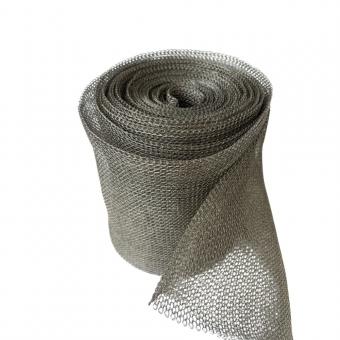
BSTFLEX supplies stainless steel wool exhaust packing and stainless steel wool rolls for suitable exhaust packing constructions.
The metallic layer should be specified separately from the main acoustic fiber. Define:
Do not automatically replace the complete fiberglass charge with stainless steel wool. In many designs, the materials perform different functions within the same packing system.
Ceramic fiber and basalt fiber can also be evaluated where the approved exhaust design requires those material families. A higher catalog temperature number alone is not sufficient reason to change from an existing fiberglass specification.
For ceramic fiber projects, review the BSTFLEX Ceramic Fiber Muffler Packing. For basalt fiber projects, review the Basalt Loose Fill Exhaust Muffler Packing and other basalt options in the Muffler Packing range.
For either material, identify the exact grade, supplied form, handling requirements, operating conditions and sample-approval method. Do not treat generic furnace wool, building mineral wool or another unrelated insulation product as an automatic exhaust silencer substitute.
A standby generator tested periodically and a prime-power generator operating for long periods can impose different service conditions on the same nominal silencer geometry.
Provide the supplier with available information on:
The words diesel generator do not define a universal packing material. The actual exhaust and silencer conditions remain the engineering basis for selection.
When requesting high temperature industrial exhaust packing, identify where the temperature is measured.
Possible values include:
These values are not interchangeable.
Also separate continuous service from short peaks. Ask what any quoted material rating represents and which constituent it applies to. A fiber rating does not automatically apply to binders, stitching, retaining fabric, adhesives or the complete assembled silencer.
For a simple cylindrical absorptive section with a centered circular core, the theoretical annular packing volume can be estimated from:
V = π × (D2 - d2) × L / 4,000,000
When dimensions are entered in millimeters:
The excluded inner envelope may include the perforated core and any metallic core-side layer. Subtract the volume of partitions, structural members and other parts that occupy the acoustic cavity.
For rectangular, oval or irregular industrial silencers, use the actual cross-sectional area from the drawing rather than forcing the geometry into the circular formula.
Once the usable packing volume is known, a previously approved installed density can be converted into a target fiber weight:
Dry fiber weight = net packing volume × approved installed density.
This calculation does not select the correct density for a new design. It converts an existing engineering requirement into a production quantity.
For a new generator silencer, the appropriate packing quantity should be established through the silencer design and validation process. Do not use a motorcycle muffler density, another supplier's published figure or an arbitrary value as the default for a large industrial silencer.
A large exhaust silencer may contain several acoustic sections rather than one continuous annular cavity.
The drawing should identify each region separately, for example:
For each zone, define:
A correct total packing weight does not guarantee correct distribution when several isolated cavities are present.
Industrial exhaust silencers can use a perforated metal facing, wire mesh, fiberglass cloth or another retaining layer between the acoustic media and the gas path.
BSTFLEX offers a Stainless Steel Exhaust Screen for Muffler Packing Retention for suitable constructions.
Where a retaining screen is required, specify:
Where cloth is used, specify its material and construction separately. Do not assume that any fiberglass cloth is suitable simply because the primary acoustic media is also fiberglass.
Industrial silencer manufacturers can purchase packing in several ways.
| Supply Form | Suitable Production Situation | Main Purchasing Controls |
|---|---|---|
| Bulk loose fiber | The manufacturer has an established weighing and filling process. | Material grade, package net weight and charge per packing zone. |
| Continuous fiber or yarn | The factory processes or forms the material during silencer production. | Fiber construction, package format and material consumption per part. |
| Mat or sheet | Repeatable cutting patterns are used behind perforated panels or around cores. | Areal weight, thickness, cut dimensions and usable yield. |
| Pre-weighed charge | Line-side weighing should be reduced or eliminated. | Dry fiber weight, tolerance, bag tare, label and quantity per silencer. |
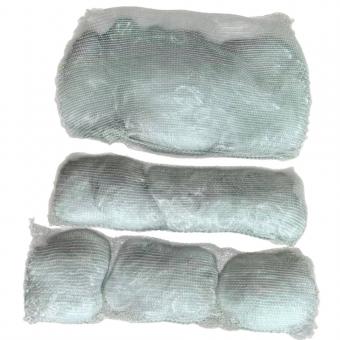
| Fabricated pack or pillow | The design uses contained acoustic media in defined cavities. | Fiber filling, cover material, dimensions, seams and finished weight. |
Bulk muffler packing is not automatically the lowest-cost option. Compare material price with weighing, cutting, filling, scrap, quality control and assembly labor.
Large OEM orders need a packaging specification as well as a material specification.
For bulk fiber, define:
For pre-weighed charges or cut components, also define:
Do not use total pallet weight as the only production quantity control.
Fibrous packing should arrive in the agreed material condition. Water, oil, dust or foreign fibers can change measured weight and affect processing.
For bulk industrial supply:
A package that has gained moisture can weigh more without containing more approved dry acoustic fiber.
| Inspection Area | Typical Requirement |
|---|---|
| Material identity | Correct fiber grade, product reference and required documentation. |
| Package quantity | Net fiber weight or counted pre-weighed charges. |
| Mat or component dimensions | Width, length, thickness or shaped geometry to approved drawing. |
| Metallic layer | Correct stainless steel wool or retaining-screen specification where included. |
| Condition | No unacceptable contamination, moisture damage or packaging failure. |
| Traceability | Lot number, part number and required shipment documents. |
Agree sampling rates, measurement methods and tolerances before repeat orders. Do not create acceptance limits after shipment from one randomly selected package.
Existing industrial silencers may reach the replacement stage without a complete original packing specification.
Where possible, provide:
Used packing weight should not automatically be treated as the original charge. Material may have been lost, contaminated or redistributed during service.
A replacement project should reproduce an approved construction or establish a revised specification through appropriate engineering evaluation.
Industrial engine exhaust systems can produce condensate. Where the silencer includes drain points, sumps or defined liquid paths, the packing arrangement should preserve those functions.
Show drains and low points on the cross-section provided to the packing supplier. Do not fill a drainage space or block a drain opening with loose fiber because it appears to be an unused cavity.
The silencer designer remains responsible for the complete exhaust, drainage and corrosion-control arrangement.
Packing material is one component of the silencer. Final acoustic performance also depends on:
Do not assign a guaranteed decibel reduction to the packing material alone.
For an OEM sample, record material identity, filling quantity, zone distribution, retaining layers and assembly revision. Compare performance under the agreed engine load and measurement method. Include pressure-drop or backpressure evaluation where required by the exhaust-system design.
| RFQ Field | Information to Provide |
|---|---|
| Application | Standby generator, prime-power generator, diesel engine, gas engine or other industrial equipment. |
| Silencer design | Absorptive, reactive/absorptive combination, drawing or internal cross-section. |
| Packing zones | Dimensions and quantity of each acoustic cavity. |
| Material | Existing approved material or required fiberglass, stainless steel wool, ceramic or basalt direction. |
| Filling requirement | Dry weight, density or development requirement for each zone. |
| Retention | Perforated facing, wire screen, cloth, core wrap or other layers. |
| Operating conditions | Continuous and peak temperatures, engine duty and relevant gas-flow information. |
| Supply form | Bulk fiber, mat, roll, cut piece, pre-weighed charge or fabricated pack. |
| Commercial quantity | Prototype quantity, order quantity and annual demand. |
| Packaging | Bag weight, carton quantity, pallet requirement, labels and traceability. |
When the existing specification is incomplete, mark the unknown fields as development items. Do not fill them with generic motorcycle or automotive packing values.
No. Internal silencer packing is acoustic material installed inside an absorptive silencer section. Exhaust pipe insulation is fitted outside the pipe to control heat transfer.
Fiberglass is used as acoustic media in suitable absorptive industrial silencers, but the exact glass grade, construction, temperature conditions and retention system must be approved for the application.
Not every design does. Stainless steel wool may be specified near the perforated core where the design requires a metallic protective layer. Follow the approved silencer construction.
BSTFLEX can discuss bulk fiber, rolls, mats, cut components, pre-weighed charges and fabricated packing formats for suitable OEM projects. Final material, packaging and order quantities should be agreed during quotation.
Use the approved silencer specification where available. Otherwise, calculate the actual acoustic cavity volume and establish the required material quantity through the silencer development and validation process. Engine power alone is not enough to determine packing weight.
Used material can provide a reference but should not automatically define the original charge. Fiber loss, contamination and redistribution may have changed its weight during service.
Send BSTFLEX the industrial silencer drawing, packing-zone dimensions, existing material specification, operating conditions and required production quantity. State whether you need bulk material, mats, rolls, pre-weighed charges or fabricated packing components.
For drawing- and sample-based projects, use the BSTFLEX OEM Muffler Packing Manufacturing Service. Other materials and supply formats are available through the Muffler Packing product range.
Request Generator and Industrial Exhaust Silencer Packing Samples and a Bulk Quote

No.10, Chuangxin North Road, Nanshan Park, Ningguo Economic and Technological Development Zone, Ningguo City, Anhui Province, China
tel/Whatsapp : 0086-15856303740
e-mail : sales@bstbraidedsleeve.com
Skype : vanesa-cheng