czego szukasz?
Start with the airbox wall facing the exhaust. A reflective sheet on that surface can reduce radiant heat reaching the housing, provided the material, clearance and attachment suit the installation. The lid may be easier to reach, but a manifold or downpipe beside the lower housing can make the sidewall the more useful place to begin.
For an intake manufacturer, the finished patches need to fit the molded or fabricated housing, stay attached and leave the filter accessible. BSTFLEX supplies reflective heat barrier sheets and mats for evaluating these external surfaces, with custom cutting reviewed against the selected material and drawing.
There are two questions to answer before ordering airbox insulation. Where does the inlet draw its air, and which parts of the housing are exposed to a nearby heat source?
An intake drawing warm engine-bay air needs its air supply considered first. A reflective patch leaves that air source unchanged. Where the inlet already receives cooler outside air, shielding an exhaust-facing wall can address a separate heat input through the housing. Heat conducted through a mounting bracket or picked up farther along the intake duct may need its own treatment.
Look at the airbox in the vehicle, including the underside and the surfaces hidden behind pipework. Mark the wall that faces the manifold, turbine housing or downpipe. Use that exposure map to establish the trial coverage instead of covering every accessible surface.
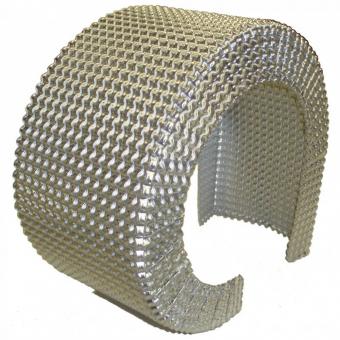
A separate metal partition is another design option when the layout needs a supported barrier between components. The formed aluminum intake heat shield guide covers that arrangement. Here, the material attaches to the existing airbox exterior.
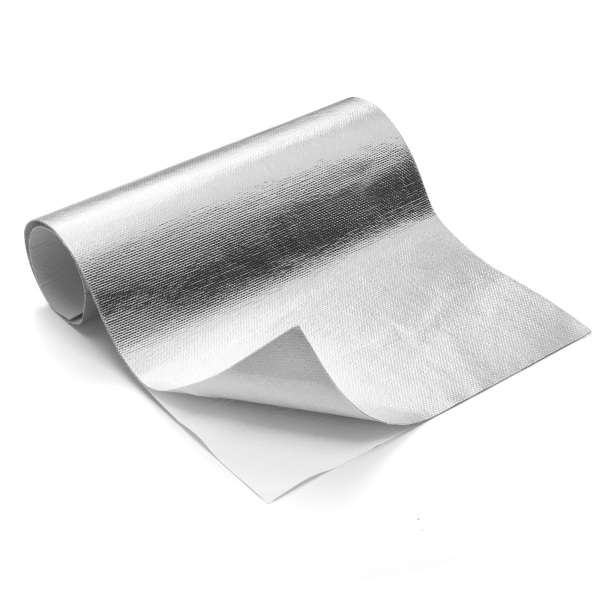
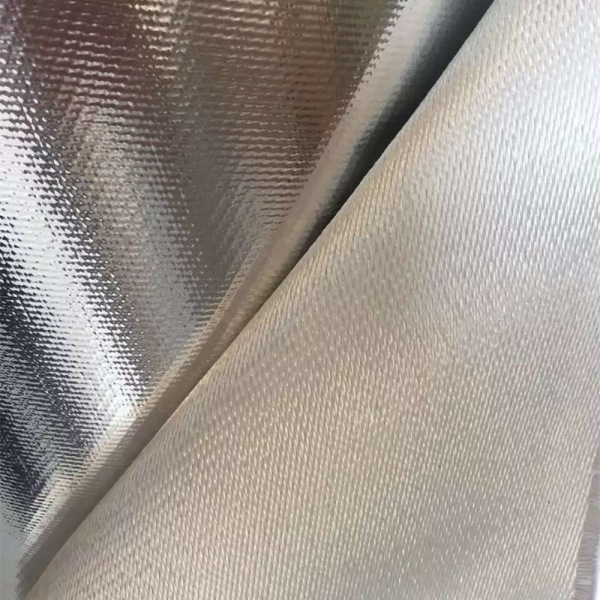
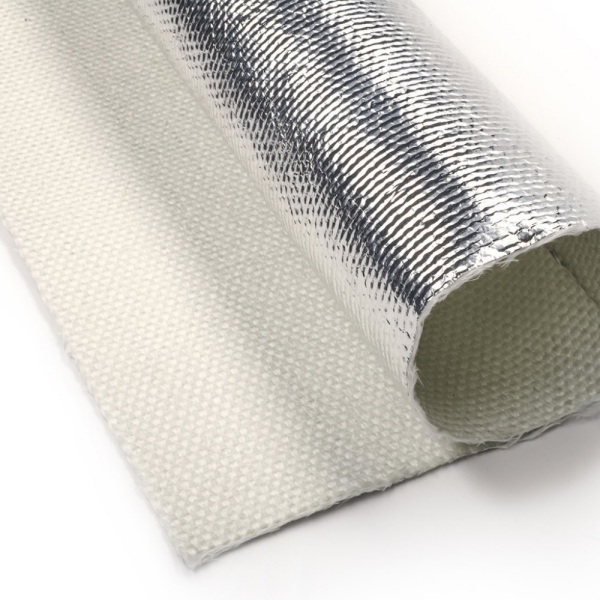
The BSTFLEX adhesive-backed aluminum heat reflective sheet combines an aluminized facing with a glass-fiber layer and pressure-sensitive backing. It is a starting candidate for localized coverage on a suitable housing surface. Request the quoted thickness and test the sample around the actual ribs, corners and mounting features.
The gold heat reflective sheet offers a gold reflective facing with fiberglass reinforcement and adhesive backing. Where a visible gold finish is part of the product design, include it in the sample comparison.
For projects specifying a fiberglass mat, the adhesive-backed aluminum heat shield mat provides an aluminum face, fiberglass layer and mounting adhesive. Compare its quoted thickness and fit around the housing with the sheet candidates.
Whichever candidate is selected, the reflective face needs to remain exposed toward the radiant source. Check the space from the finished patch to the hot component, including engine movement and local material build-up. Required separation comes from the selected construction and vehicle layout; pressing the laminate against the exhaust changes the exposure entirely.
A plastic airbox heat shield needs a bond trial on the molded housing or a representative sample of its surface. Obtain the resin grade and surface finish from the housing supplier. Polypropylene and polyethylene, for example, have low surface energy and can require a different adhesive approach from painted metal. Plastic appearance alone does not identify the bonding conditions.
On a fabricated metal airbox, paint or powder coating is the surface the adhesive contacts. On a molded housing, texture and residues from manufacture can affect contact. Prepare the surface using a method compatible with both the housing and backing, then follow the specified application pressure and dwell conditions.
Check the temperature at the adhesive interface through the relevant operating cycle. The facing, glass-fiber layer and mounting adhesive have separate limits; a high facing-temperature figure does not approve the bond. For backing selection and surface preparation, see the peel-and-stick heat shield selection guide.
Assess the bond after heat cycling and the expected vibration or fluid exposure. Record lifting edges and movement as well as whether the center remains attached. If the housing surface cannot support a dependable bond, return to the attachment design before ordering production patches.
The lid still needs to come off. Give the upper and lower housing separate coverage patterns where the service joint requires it, and leave enough room to operate the clips or reach the screws. A sheet spanning the lid seam creates extra work every time the filter is changed.
Consider a downpipe running beside the lower rear corner of an airbox. A trial pattern could start with a patch on the exposed sidewall and a separate piece on the affected part of the base. Check the fit with the surrounding hoses and brackets in place.
Deep ribs and compound curves may be easier to cover with planned sections than with one large piece. Keep each section supported, check the local thickness at joints and avoid stretching the sheet across a recess. Any edge-finishing material must suit the same temperature and environmental conditions.
Keep the inlet, drains, filter seal, mounting points and sensor connections functional. This guide concerns external patches. Material on the inside of an intake housing needs separate approval for exposure to the airstream, adhesion and particle release, especially downstream of the filter.
A cooler airbox wall is useful evidence about the covered surface. To claim an intake-air temperature improvement, measure the air at a defined point. Write down where the sensor sits: an airbox outlet, a duct and an intake manifold are different locations, with different opportunities for heat pickup between them.
Use the same housing, filter, intake route and sensor position for the comparison. Record ambient air temperature, engine load, vehicle speed or test airflow, and the hood position. Keep the operating sequence comparable and repeat the runs. If the duct routing or filter changes during the trial, the result describes the combined modification.
Include a hot stop and return to operation when heat soak is the problem being investigated. Hot components continue transferring heat after shutdown while airflow changes. Record the temperature history through the stop and restart rather than selecting one favorable reading. A lower peak, quicker recovery after restart and lower temperature during sustained running are distinct results.
Report the outcome for the tested arrangement. A measured intake-temperature change does not establish a horsepower increase or fuel-economy benefit; those would require their own controlled evaluation. This keeps a material-selection trial focused on the result it was designed to measure.
Once the material and coverage are approved, assign separate references to the lid and lower-housing patches. Include orientation and the openings that locate each piece. This gives an assembly operator a defined part to fit instead of a rectangular sheet to mark and trim.
BSTFLEX can review custom die-cut heat shield parts for the approved outline. Supply a housing drawing or template, photographs showing the heat-source side, the resin or coating information, and the agreed temperature conditions. Add the prototype quantity and expected production demand so the quotation covers the intended supply format.
Ask BSTFLEX for airbox heat shield samples or a custom-cut quotation. The most useful starting package is a marked photograph of the installed housing, a coverage pattern and the mounting-surface details. Together, they show which wall needs protection and what the material must fit.

No.10, Chuangxin North Road, Nanshan Park, Ningguo Economic and Technological Development Zone, Ningguo City, Anhui Province, China
tel/Whatsapp : 0086-15856303740
e-mail : sales@bstbraidedsleeve.com
Skype : vanesa-cheng